
The Story
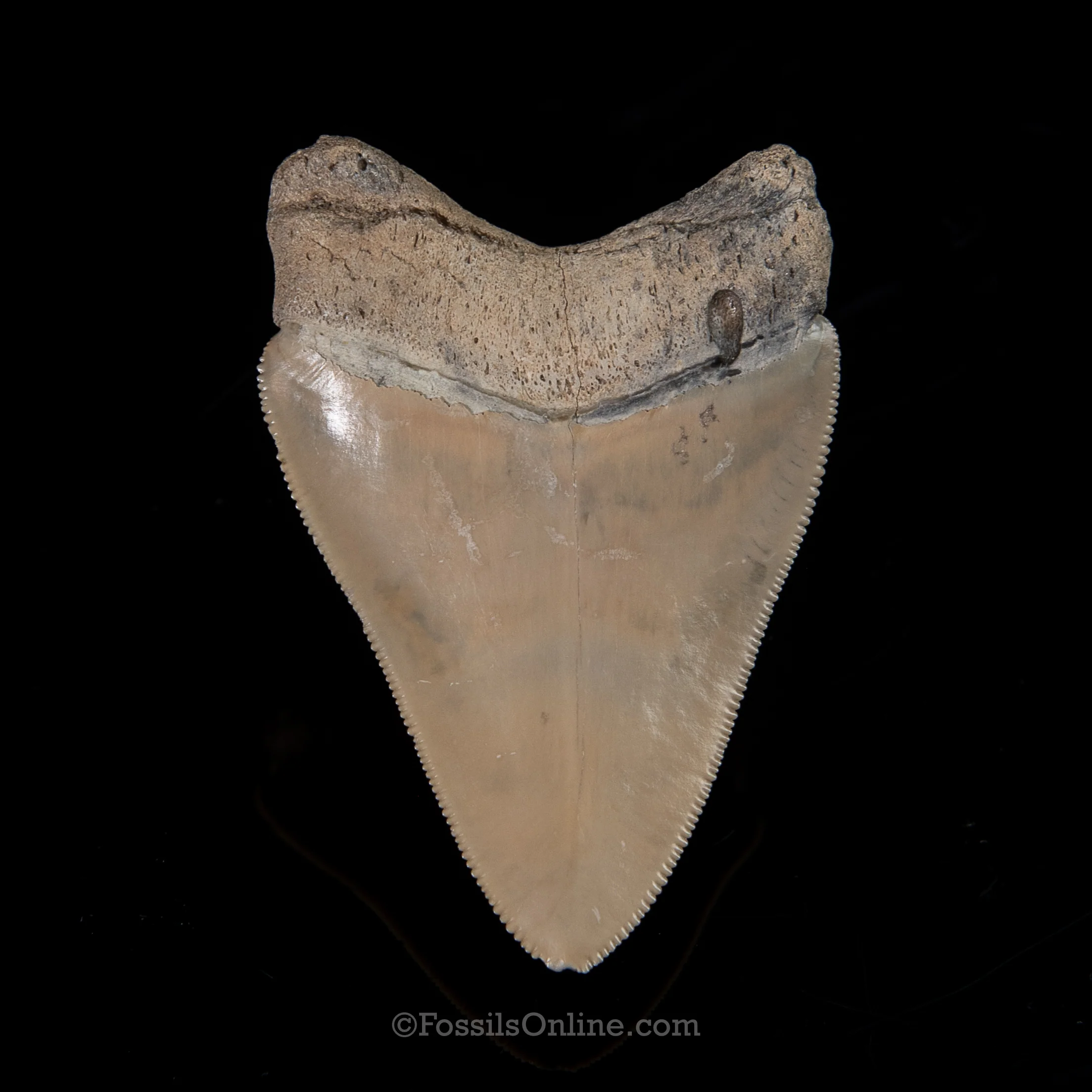
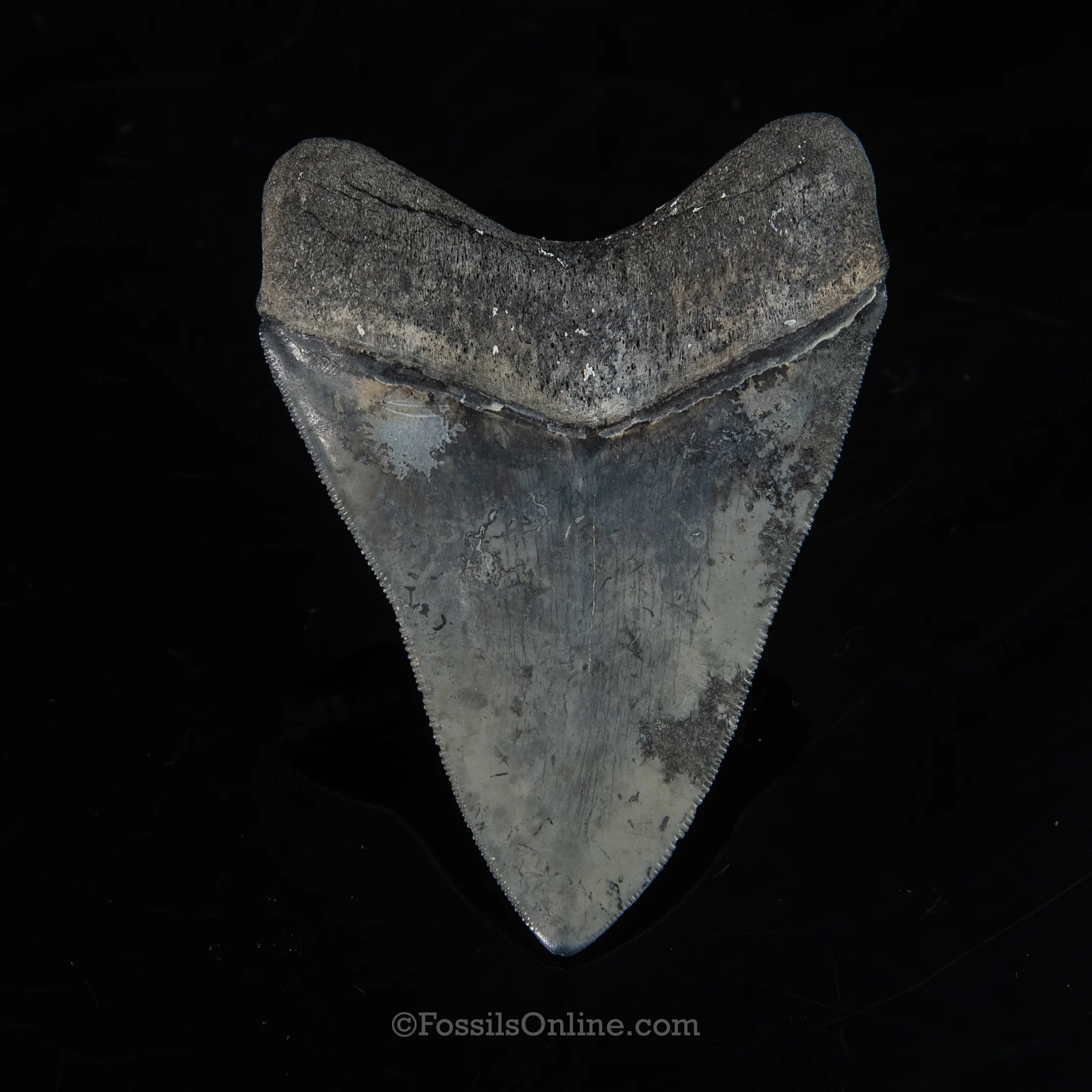
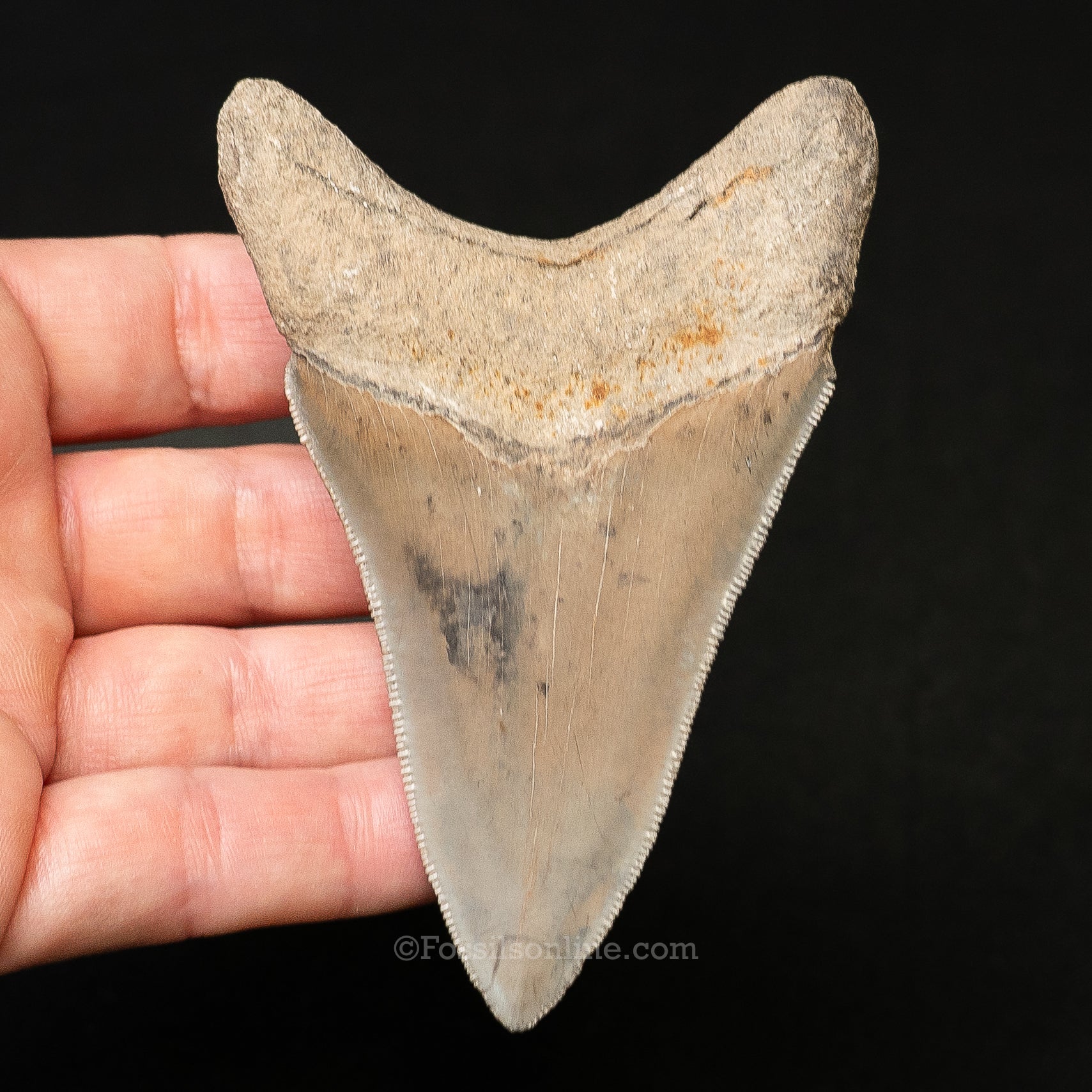
This is a genuine fossilized megalodon tooth, measuring 4.44", recovered from offshore North Carolina, one of the most famous megalodon fossil localities in the world. A display stand is included, as shown in photos. This specimen was legally recovered by fossil divers and is guaranteed 100% authentic. No reproductions, no casts.
About Megalodon:
Ancient river channels and fossil rich formations lie beneath the North Carolina coastline, laid down during shallow Miocene and Pliocene seas that were ideal habitat for megalodon and the whales it hunted. Ocean currents and storms continue to expose these fossil layers today, allowing divers to recover teeth like this one from the seafloor.
Why megalodon teeth survive as fossils:
Megalodon's skeleton was made of cartilage, which broke down quickly after death and rarely survives in the fossil record. Its teeth, however, were dense and enamel coated, built to withstand crushing bite forces, far more durable than the rest of the animal. Like modern sharks, megalodon continuously shed and regrew its teeth throughout its lifetime, so a single animal could produce thousands of teeth over the course of its life. That combination of durability and volume is why fossil teeth remain the most common, and most collectible, evidence this species ever existed.
A giant built for the hunt:
Research suggests megalodon may have been able to keep parts of its body warmer than the surrounding water, similar to some modern sharks, which likely helped fuel its rapid growth and massive size. Combined with an ocean full of large, calorie rich prey like whales, and possibly a more streamlined build than older reconstructions suggest, megalodon grew into one of the most formidable predators to ever swim the Earth's oceans.
Color and preservation:
North Carolina megalodon teeth are recognizable at a glance, often showing coastal color patterns: creams, tans, light browns, and blue gray or greenish enamel, caused by the phosphate rich marine sediments they were preserved in. This specimen carries its own unique wear pattern, color, and texture from millions of years in moving seawater, making it one of a kind.

Details & Craftsmanship
Every detail has been carefully considered to bring you the perfect product.

Details & Craftsmanship
Every detail has been carefully considered to bring you the perfect product.
Description
This is a genuine fossilized megalodon tooth, measuring 4.44", recovered from offshore North Carolina, one of the most famous megalodon fossil localities in the world. A display stand is included, as shown in photos. This specimen was legally recovered by fossil divers and is guaranteed 100% authentic. No reproductions, no casts.
About Megalodon:
Ancient river channels and fossil rich formations lie beneath the North Carolina coastline, laid down during shallow Miocene and Pliocene seas that were ideal habitat for megalodon and the whales it hunted. Ocean currents and storms continue to expose these fossil layers today, allowing divers to recover teeth like this one from the seafloor.
Why megalodon teeth survive as fossils:
Megalodon's skeleton was made of cartilage, which broke down quickly after death and rarely survives in the fossil record. Its teeth, however, were dense and enamel coated, built to withstand crushing bite forces, far more durable than the rest of the animal. Like modern sharks, megalodon continuously shed and regrew its teeth throughout its lifetime, so a single animal could produce thousands of teeth over the course of its life. That combination of durability and volume is why fossil teeth remain the most common, and most collectible, evidence this species ever existed.
A giant built for the hunt:
Research suggests megalodon may have been able to keep parts of its body warmer than the surrounding water, similar to some modern sharks, which likely helped fuel its rapid growth and massive size. Combined with an ocean full of large, calorie rich prey like whales, and possibly a more streamlined build than older reconstructions suggest, megalodon grew into one of the most formidable predators to ever swim the Earth's oceans.
Color and preservation:
North Carolina megalodon teeth are recognizable at a glance, often showing coastal color patterns: creams, tans, light browns, and blue gray or greenish enamel, caused by the phosphate rich marine sediments they were preserved in. This specimen carries its own unique wear pattern, color, and texture from millions of years in moving seawater, making it one of a kind.